
Few travel experiences in the world feel as powerful as walking the ancient Inca Trail to Machu Picchu. Every step brings you closer to misty mountains, hidden archaeological sites, cloud forests, stone stairways, and one of the most emotional arrivals in South America: your first view of Machu Picchu from the Sun Gate.
For many travelers, the Inca Trail to Machu Picchu is more than a trek. It is a personal journey through history, nature, culture, and adventure. You do not need to be an expert hiker to enjoy it, but you do need good preparation, the right attitude, and a reliable local team to guide you safely along the way.
This complete travel guide is designed for first-time hikers who want to understand how the Classic Inca Trail works before booking. Here, you will learn about the route, difficulty, permits, packing list, altitude, best travel season, and why booking with a trusted Cusco-based travel agency can make your Machu Picchu hiking tour smoother, safer, and truly unforgettable.
What Is the Inca Trail to Machu Picchu?
The Inca Trail to Machu Picchu is the most famous trekking route in Peru and one of the most iconic hikes in the world. This historic route follows original stone paths built by the Incas, connecting the Sacred Valley with the legendary citadel of Machu Picchu.
Unlike other Peru trekking tours, the Inca Trail trek is special because it combines adventure with living history. Along the way, hikers pass ancient archaeological sites, high mountain passes, subtropical cloud forests, dramatic valleys, and stone stairways that have survived for centuries.
The Classic Inca Trail usually begins at Km 82, near Ollantaytambo in the Sacred Valley. From there, the trail leads hikers through remote Andean landscapes and impressive Inca ruins before reaching Machu Picchu through Inti Punku, the famous Sun Gate.
This final entrance is what makes the Cusco to Machu Picchu trek so unique. Instead of arriving by train or bus, you walk into Machu Picchu the way ancient travelers once did: from above, with the sanctuary slowly appearing between the mountains.
Why First-Time Hikers Choose the Inca Trail
First-time hikers choose the Inca Trail because it offers a perfect balance of challenge, beauty, comfort, and emotional reward. It is adventurous, but not impossible. It is demanding, but achievable with good preparation and expert support.
The trail gives beginners a true sense of accomplishment. Each day brings new landscapes, new stories, and new reasons to keep walking. You may feel tired on the uphill sections, but then you reach a viewpoint, an Inca site, or a quiet mountain pass, and suddenly every step feels worth it.
A well-organized Inca Trail tour package also makes the experience much easier for first-time hikers. Professional guides lead the way, porters help carry camping equipment, cooks prepare fresh meals, and the team takes care of logistics, permits, campsites, transportation, and safety.
This support allows travelers to focus on the experience: walking ancient paths, learning about Inca culture, enjoying the mountains, and sharing the journey with a small group of fellow adventurers.
Most importantly, the Inca Trail creates a deep emotional connection with Machu Picchu. By the time you arrive at the Sun Gate, Machu Picchu is not just a place you visit. It becomes a destination you earned step by step.
Classic Inca Trail Itinerary Overview
Day 1: Cusco – Km 82 – Wayllabamba
Your adventure begins with an early departure from Cusco toward the Sacred Valley and Km 82, the official starting point of the Classic Inca Trail.
The first day is a gentle introduction to the route. You hike through Andean valleys, farming communities, cactus-covered hillsides, and scenic mountain landscapes. Along the way, your guide introduces you to the history of the trail and the importance of the Inca road system.
You will also enjoy your first views of archaeological sites such as Llactapata, a beautiful Inca complex surrounded by mountains. This day helps your body adjust to the trail while building excitement for the days ahead.
Day 2: Wayllabamba – Dead Woman’s Pass – Pacaymayo
Day 2 is the most challenging day of the Inca Trail trek. The route climbs steadily toward Warmiwañusca, better known as Dead Woman’s Pass, the highest point of the Classic Inca Trail.
The ascent is demanding because of the altitude, steep sections, and long stone steps. However, with patience, slow walking, and the support of your guide, it is achievable for many first-time hikers.
Reaching the pass is one of the most rewarding moments of the trek. From the top, you are surrounded by dramatic peaks, deep valleys, and powerful Andean scenery. After celebrating this achievement, you descend toward Pacaymayo, where the campsite offers a peaceful place to rest.
Day 3: Pacaymayo – Phuyupatamarca – Wiñay Wayna
Day 3 is often considered the most beautiful day of the Inca Trail to Machu Picchu. The trail becomes more mysterious and atmospheric as you pass through cloud forest, ancient tunnels, stone stairways, and several remarkable archaeological sites.
You will visit places such as Runkurakay, Sayacmarca, Phuyupatamarca, and Wiñay Wayna. Each site reveals something different about Inca engineering, spirituality, agriculture, and connection with nature.
The landscape also changes dramatically. Mist rises from the forest, orchids grow beside the trail, and the mountains appear and disappear through the clouds. By the time you reach Wiñay Wayna, you are very close to Machu Picchu, and the excitement becomes unforgettable.
Day 4: Wiñay Wayna – Sun Gate – Machu Picchu – Cusco
The final day begins early. You hike toward Inti Punku, the Sun Gate, where the first view of Machu Picchu appears between the mountains.
This is the moment many travelers dream about for years. After several days of hiking, you finally see the Lost City of the Incas below you, surrounded by green peaks and morning light.
From the Sun Gate, you continue down to Machu Picchu for a guided tour of the archaeological sanctuary. Your guide explains the temples, terraces, plazas, and sacred spaces that make this site one of the world’s greatest travel destinations.
After the visit, you travel to Aguas Calientes and then return by train and transportation to Cusco, carrying memories that will stay with you for a lifetime.
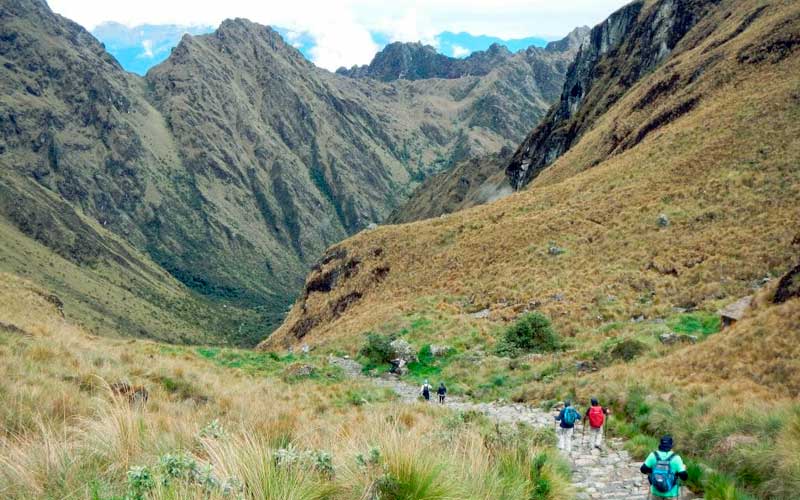
How Difficult Is the Inca Trail?
The Inca Trail is considered a moderate to challenging trek. It is not a technical climb, and you do not need mountaineering experience, but you should be prepared for several days of hiking at altitude.
The main challenges are the elevation, stone steps, steep climbs, downhill sections, and changing weather. Some days can include 6 to 8 hours of hiking, depending on the pace of the group and trail conditions.
The hardest section is usually Day 2, when hikers cross Dead Woman’s Pass. This day requires patience, steady breathing, and mental strength. However, many first-time hikers complete the trek successfully every year with proper acclimatization and preparation.
To prepare before your trip, start walking regularly at least a few weeks in advance. Add uphill hikes, stairs, or light cardio training if possible. Practice using your hiking boots before arriving in Peru, and train with a small daypack so your body gets used to carrying essentials.
The best advice is simple: do not rush. Walk slowly, drink water, listen to your guide, and enjoy the journey. The Inca Trail is not a race. It is an experience to be lived fully.
Best Time to Hike the Inca Trail
The best time to hike the Inca Trail to Machu Picchu is during the dry season, from May to September. These months usually offer clearer skies, better mountain views, and more stable trail conditions.
June, July, and August are the most popular months, so permits sell out quickly. If you plan to travel during this period, it is best to book several months in advance.
The shoulder months of April, October, and early November can also be excellent. These months often bring fewer crowds, greener landscapes, and a beautiful mix of weather conditions.
The rainy season runs roughly from November to March. During this time, the trail is greener and less crowded, but hikers should expect rain, muddy sections, and cloudy views.
The Inca Trail is closed every February for maintenance, conservation, and safety work. Machu Picchu can still be visited by train in February, but the Classic Inca Trail trek is not available during that month.
Inca Trail Permits and Booking Advice
Inca Trail permits are limited by the Peruvian authorities to protect the route, archaeological sites, and natural environment. This limit includes travelers, guides, cooks, and porters, which means spaces for hikers are restricted.
For this reason, Inca Trail permits can sell out months in advance, especially from May to September. If the Inca Trail to Machu Picchu is your dream experience, do not wait until the last minute.
Permits are personal and require your passport details at the time of booking. Once issued, they are normally non-transferable and cannot simply be changed to another person. Your passport must match the information on your permit when entering the trail.
A reliable local agency will help you check availability, secure your permit, organize your itinerary, and explain every important detail before the trek. Booking early gives you the best chance of getting your preferred date and planning the rest of your Peru trip with confidence.
What Is Included in an Inca Trail Tour Package?
A professional Inca Trail tour package usually includes everything needed for a safe and organized trekking experience.
Typical inclusions are:
Transportation from Cusco to the trailhead, official Inca Trail permits, Machu Picchu entrance ticket, professional bilingual guide, camping equipment, dining tent, kitchen tent, porters, cook, meals during the trek, first aid support, return train ticket, transfer back to Cusco, and pre-tour assistance.
Most agencies also provide a briefing before the trek, where your guide explains the route, packing details, pick-up time, weather conditions, and safety recommendations.
When comparing Peru trekking tours, do not choose only by price. Check what is included, how porters are treated, whether the company is licensed, how experienced the guides are, and how much support you receive before and during the trip.
A good operator does more than sell the trek. They protect your experience.
What to Pack for the Inca Trail
Packing well makes the Inca Trail trek more comfortable and enjoyable. The goal is to bring what you need without carrying too much.
Essential items include your original passport, comfortable hiking boots, rain jacket, warm layers, breathable trekking clothes, sun hat, sunglasses, sunscreen, insect repellent, reusable water bottle, headlamp, personal medication, toiletries, snacks, camera, and a small daypack.
You should also bring a lightweight fleece or down jacket for cold mornings and evenings. Weather can change quickly in the Andes, so layers are very important.
Avoid bringing unnecessary heavy items. Most tour packages include porters for camping equipment, but you will still carry your daily essentials such as water, rain gear, snacks, camera, and personal items.
Your agency should provide a clear packing list before departure so you know exactly what to bring and what to leave safely in Cusco.
Altitude and Acclimatization Tips
Altitude is one of the most important things to consider before hiking the Inca Trail to Machu Picchu. Cusco is located at high elevation, and the trail reaches even higher points during the trek.
For first-time hikers, it is strongly recommended to spend at least 2 days in Cusco or the Sacred Valley before starting the trek. This gives your body time to adjust and reduces the risk of altitude discomfort.
During your first days in Cusco, walk slowly, drink plenty of water, eat light meals, and avoid heavy alcohol consumption. Coca tea may also help some travelers feel more comfortable, although hydration and rest are the most important habits.
The Sacred Valley can be a good acclimatization option because it is lower than Cusco and offers beautiful places to visit before the trek, such as Pisac, Ollantaytambo, and Chinchero.
Listen to your body and tell your guide immediately if you feel unwell during the hike. A professional guide is trained to support hikers and manage altitude-related concerns safely.
Why Book with a Local Cusco-Based Travel Agency?
Booking your Inca Trail to Machu Picchu with a local Cusco-based travel agency gives you a more personal, reliable, and authentic experience.
Local operators know the trail deeply because they live and work in the region. Their guides understand the history, culture, weather, altitude, logistics, and small details that make the trek run smoothly.
You also benefit from direct communication. If you have questions about permits, packing, hotels, airport transfers, acclimatization, or itinerary planning, a local team can assist you before you even arrive in Peru.
Responsible local agencies also support the regional economy. They create jobs for guides, porters, cooks, drivers, and local families. A trustworthy company treats its trekking staff fairly and works to protect the trail for future generations.
Most importantly, a good local agency gives you peace of mind. From your arrival in Cusco to your return from Machu Picchu, you know there is a team ready to help you enjoy a safe, well-organized, and memorable journey.
Who Is This Trek Best For?
The Classic Inca Trail is ideal for travelers who want the most authentic way to reach Machu Picchu.
It is perfect for adventurous couples, families with active teenagers, solo travelers, small groups of friends, first-time visitors to Peru, and hikers who want a meaningful challenge without needing technical climbing experience.
It is also a great choice for travelers who love history, nature, photography, culture, and once-in-a-lifetime experiences.
If you want more than a simple visit to Machu Picchu, the Inca Trail is the right choice. It allows you to understand the journey, not just the destination.
Final Booking Motivation
The Inca Trail to Machu Picchu is one of those rare journeys that stays with you long after the trip ends. You will remember the mountain air, the ancient stones beneath your feet, the kindness of your trekking team, the silence of the cloud forest, and the unforgettable moment when Machu Picchu appears from the Sun Gate.
For first-time hikers, this trek can feel like a big step. But with preparation, expert guidance, and a reliable local operator, it becomes a safe, inspiring, and life-changing adventure.
Because Inca Trail permits are limited and the best dates sell out quickly, early booking is the smartest decision. Secure your preferred departure, prepare with confidence, and let a trusted Cusco-based team take care of the details.
Your journey to Machu Picchu does not have to begin at the entrance gate. It can begin on the ancient Inca Trail, where every step brings you closer to one of the most magical places on Earth.
Book your Inca Trail tour package early and experience Machu Picchu the most unforgettable way.
FAQs About the Inca Trail to Machu Picchu
Is the Inca Trail suitable for beginners?
Yes, the Inca Trail can be suitable for beginners with good preparation. You do not need to be an expert hiker, but you should be comfortable walking several hours per day and prepared for altitude, stairs, and steep sections.
How many days is the Classic Inca Trail?
The Classic Inca Trail is usually a 4-day, 3-night trek. It starts near Km 82 in the Sacred Valley and ends with a guided visit to Machu Picchu on the final day.
How far in advance should I book the Inca Trail?
It is best to book several months in advance, especially for the high season from May to September. Permits are limited and can sell out quickly.
What is the highest altitude on the Inca Trail?
The highest point is Dead Woman’s Pass, also known as Warmiwañusca. It reaches approximately 4,215 meters above sea level.
Do I need a guide for the Inca Trail?
Yes. The Inca Trail is a regulated route, and hikers must enter with an authorized tour operator and licensed guide. Independent hiking is not allowed on the Classic Inca Trail.
What happens if permits are sold out?
If permits are sold out for your preferred date, you may need to choose another date or consider alternative treks such as the Short Inca Trail, Salkantay Trek, Lares Trek, or Choquequirao Trek.
Is the Inca Trail open all year?
The Inca Trail is open most of the year, but it is closed every February for maintenance and conservation. Machu Picchu can still be visited by train during February.
What should I pack for the Inca Trail?
You should pack your passport, hiking boots, rain jacket, warm layers, sun protection, daypack, reusable water bottle, headlamp, personal medication, snacks, and camera. Your agency should provide a complete packing list before the trek.