
Hiking the Inca Trail to Machu Picchu is an unforgettable adventure filled with mountains, ancient ruins, cloud forests, and the emotional arrival at the Sun Gate. However, one of the biggest surprises for many travelers is the quality of the food served along the way.
Meals along the Inca Trail are not basic camping food. With a professional local operator, hikers enjoy fresh, warm, nutritious, and carefully prepared dishes in the heart of the Andes.
After a long day of walking ancient stone paths, climbing high mountain passes, and exploring Inca archaeological sites, sitting down to a hot meal at camp feels truly special.
The Classic Inca Trail is a physical challenge, but good food makes the journey more comfortable, energizing, and memorable. From early breakfasts and generous lunches to tea time, dinners, snacks, and hot drinks, every meal helps hikers stay strong for the next section of the trail.
If you are planning to book an Inca Trail tour package, understanding what food is included will help you feel more prepared and confident before your trek.
Why Meals Matter on the Inca Trail
Food plays an essential role during the Inca Trail trek.
Hikers walk several hours each day, climb steep stone steps, cross high-altitude passes, and experience changing Andean weather. Because of this, the body needs balanced meals to maintain energy, recover properly, and stay comfortable throughout the journey.
Good meals also support morale. After a challenging climb or a long descent, a hot soup, fresh vegetables, warm tea, or delicious dessert can lift the spirit and help hikers relax.
On the Inca Trail to Machu Picchu, meals are more than fuel. They are moments of rest, connection, and celebration.
Sharing food with fellow travelers, guides, cooks, and porters creates a warm atmosphere at camp. These small moments often become some of the most memorable parts of the entire trek.
What Food Is Like on the Classic Inca Trail
Food on the Classic Inca Trail is usually prepared fresh by professional trekking cooks using portable kitchen equipment at campsites.
A good local operator brings trained cooks, clean cooking tools, fresh ingredients, and organized logistics to make sure hikers eat well during the trek.
Meals are generally served in a dining tent, where travelers sit together after each hiking section. Depending on the day, meals may include breakfast, lunch, dinner, snacks, hot drinks, and afternoon tea.
The menu often combines international comfort food with traditional Peruvian and Andean ingredients such as potatoes, quinoa, corn, rice, vegetables, trout, chicken, and local herbs.
Many travelers are impressed by how trekking cooks can prepare soups, main dishes, desserts, and even cakes in remote mountain conditions.
This is one of the reasons why choosing a professional Inca Trail tour package makes such a difference.
What Meals Are Included on the Inca Trail?
A typical 4-day Classic Inca Trail tour package includes most meals during the trek.
The usual meal plan is:
Day 1: Lunch and dinner
Day 2: Breakfast, lunch, and dinner
Day 3: Breakfast, lunch, and dinner
Day 4: Breakfast
In most cases, the first breakfast before the trek is not included because travelers usually eat at their hotel in Cusco or bring something light before departure. The final lunch after visiting Machu Picchu is also usually not included, depending on the operator and itinerary.
It is always important to confirm meal inclusions before booking, as services can vary between companies.
With a trusted local Cusco-based operator, meals are carefully planned to provide energy, comfort, and variety throughout the journey.
Typical Breakfast on the Inca Trail
Breakfast on the Inca Trail is designed to prepare hikers for a full day of walking.
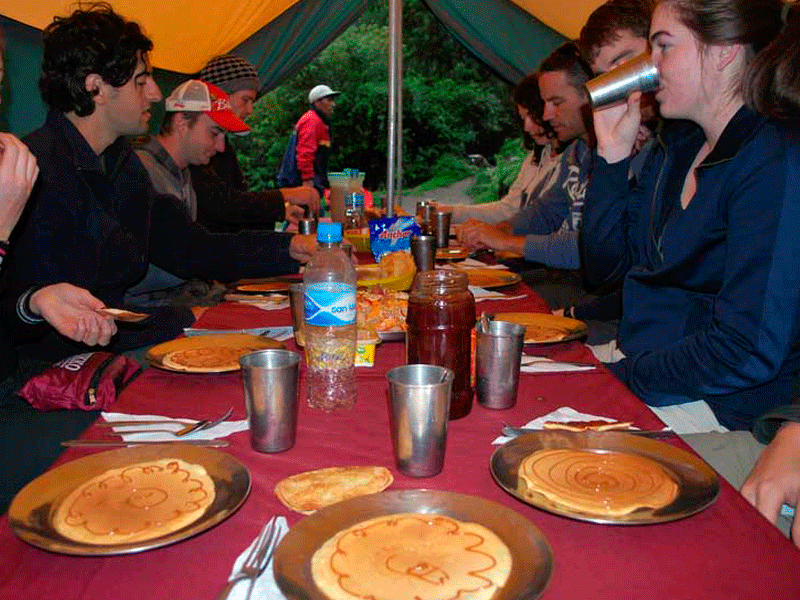
A typical breakfast may include pancakes, eggs, oatmeal, bread, butter, jam, fruit, tea, coffee, hot chocolate, and coca tea.
Some trekking teams also prepare more creative options, such as pancakes with caramel sauce, thick oatmeal with fresh apple, traditional Andean bread, or stuffed omelets with vegetables and cheese.
One traditional favorite is Pan Chuta Andino, a local bread often associated with the Cusco region. It is soft, flavorful, and perfect with butter, jam, or hot drinks.
A well-prepared breakfast gives hikers the energy they need before walking through valleys, climbing mountain passes, or descending into cloud forest.
Starting the day with warm food and a hot drink also helps the body feel more comfortable in the cool morning air of the Andes.
Lunch on the Inca Trail
Lunch is one of the most important meals during the trekking day.
After walking for several hours, hikers need a generous but balanced meal that provides energy without making them feel too heavy.
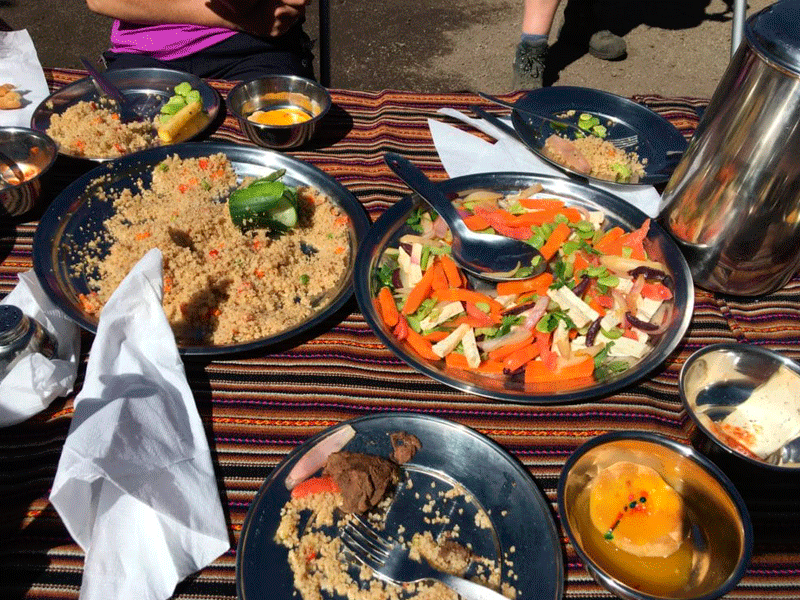
A good lunch on the Inca Trail may include soups, rice, quinoa, pasta, potatoes, vegetables, chicken, fish, beef, salads, avocado, sauces, and hot drinks.
Common examples include quinoa soup, vegetable soup, cream of asparagus soup, Peruvian chicken salad, native potatoes with chili sauce, rice, spinach pie, chicken rolls, vegetable salads, and Russian salad.
These meals are carefully prepared to restore energy and prepare hikers for the next section of the trail.
Lunch is also a time to rest, refill water bottles, enjoy the scenery, and listen to your guide’s explanation about the next part of the route.
Dinner at the Campsites
Dinner on the Inca Trail is warm, comforting, and deeply appreciated after a long day of hiking.
At camp, hikers gather in the dining tent while the mountains become quiet and the night sky appears above the Andes. After hours of walking, this meal feels like a reward.
Dinner may include soups, main dishes, vegetables, Andean ingredients, desserts, and hot drinks.
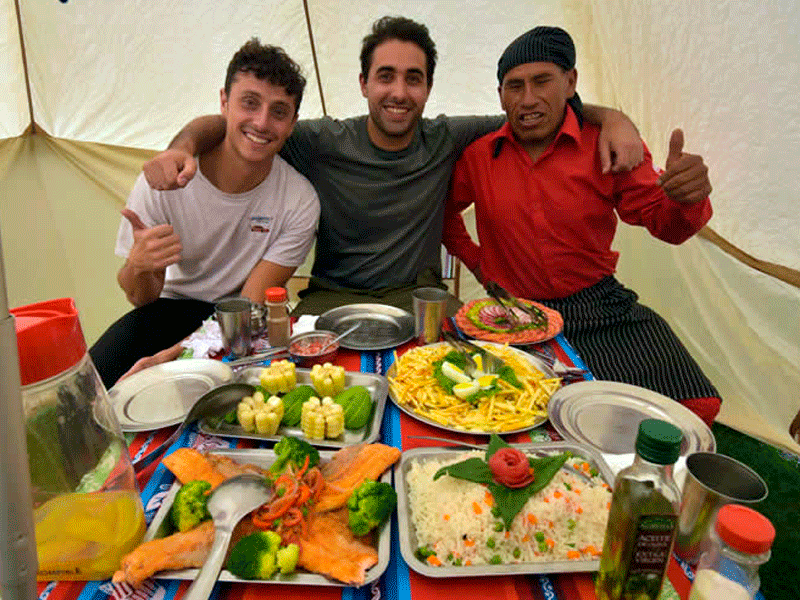
Typical dinner options can include potato soup, rice and vegetable soup, Andean corn soup, steamed trout with mushroom sauce and fresh vegetables, lightly fried chicken with home fries, stir-fried noodles with mushrooms and steamed kale, apple cinnamon pudding, chocolate cake, pudding, or jelly.
Many operators serve three-course dinners, beginning with a soup, followed by a main dish and ending with dessert.
The most impressive part is that these meals are prepared in remote campsites with simple mountain kitchen equipment. This shows the skill, dedication, and experience of the Inca Trail cook team.
Snacks and Energy Food
Snacks are important for keeping energy levels stable between meals.
Many Inca Trail operators provide a daily snack pack after breakfast. This is useful because hikers may walk several hours before reaching the lunch stop.
Snack packs may include bananas, tangerines, apples, granola bars, chocolate bars, candies, juice, biscuits, or other light energy foods.
Some travelers also bring their own favorite snacks, such as trail mix, protein bars, nuts, dried fruit, electrolyte tablets, or chocolate.
Personal snacks are especially useful on Day 2, when hikers climb toward Dead Woman’s Pass, the highest and most challenging point of the Classic Inca Trail.
However, it is best not to carry too much unnecessary food. The main meals are already organized by the trekking team, and carrying extra weight can make the hike harder.
Hot Drinks on the Trail
Hot drinks are a comforting part of the Inca Trail experience.
In the mornings and evenings, travelers often enjoy coca tea, muña tea, anise tea, chamomile tea, black tea, coffee, hot chocolate, or herbal infusions.
Coca tea is commonly used in the Andes and is often offered during high-altitude treks. Many travelers find it comforting while adjusting to the elevation.
Muña tea is another traditional Andean herbal infusion with a fresh flavor. It is popular in the Cusco region and often enjoyed after meals.
Hot chocolate and coffee are also welcome treats, especially during cold mornings or chilly nights at camp.
After a long hiking day, holding a warm cup of tea in the dining tent is one of the simple pleasures of Inca Trail camping.
Afternoon Tea Time on the Inca Trail
One of the most enjoyable traditions on the Inca Trail is afternoon tea time.
After arriving at camp, hikers usually have time to settle into their tents, clean up, and relax. Then, around late afternoon, the trekking team may serve tea time in the dining tent.
This relaxing moment can include a variety of teas, hot chocolate, coffee, freshly baked cookies, crackers with jam, honey, butter, popcorn, or crispy wontons.
Tea time helps hikers recover before dinner and creates a warm social atmosphere at camp.
After a demanding day on the trail, this small service feels surprisingly luxurious.
It is also another example of how a professional local operator can transform a challenging trek into a comfortable and memorable experience.
Fresh Ingredients and Andean Flavors
Peruvian gastronomy is one of the great pleasures of traveling in Peru, and the Inca Trail is no exception.
Meals along the Inca Trail often include fresh local ingredients such as quinoa, potatoes, corn, rice, vegetables, chicken, pork, lamb, trout, and fish.
Many dishes are seasoned with traditional Peruvian flavors, including mild or spicy chili varieties such as ají amarillo and rocoto.
The result is a delicious mix of Andean cuisine and international comfort food.
Hikers may enjoy familiar dishes with a Peruvian touch, as well as local flavors that reflect the culinary heritage of the Andes.
Each meal becomes a small celebration of Peru’s rich food culture.
Vegetarian, Vegan, and Special Dietary Options
Professional Inca Trail operators can usually accommodate vegetarian, vegan, gluten-free, lactose-free, and other special dietary needs.
However, travelers must inform the tour operator at the time of booking.
This is very important because food for the Inca Trail must be purchased and organized in advance. Once the trek begins, it is not possible to easily change ingredients or buy extra items along the route.
If you have food allergies, dietary restrictions, or specific preferences, mention them clearly before confirming your Inca Trail tour package.
A reliable local operator will prepare alternatives so you can enjoy safe, balanced, and satisfying meals during the trek.
Is the Food Safe on the Inca Trail?
Food safety is an important part of a successful trekking experience.
A professional local operator follows hygiene standards, uses clean cooking equipment, prepares meals carefully, and organizes food storage properly during the trek.
The cooking team works in mountain conditions, but experienced operators know how to manage cleanliness, preparation, and service at campsites.
Water may be boiled, filtered, or treated depending on the operator’s service. Travelers should always confirm what type of drinking water is provided before booking.
Choosing a professional and experienced trekking company is one of the best ways to ensure safe, fresh, and well-prepared meals on the Inca Trail.
This is another reason not to choose an Inca Trail tour package only based on the cheapest price.
Water and Hydration During the Trek
Hydration is essential on the Inca Trail, especially because of the altitude and physical effort.
Hikers should drink water regularly throughout the day, even when they do not feel very thirsty. Dehydration can make fatigue and altitude symptoms feel worse.
Most travelers carry a reusable water bottle or hydration bladder in their daypack.
Many professional operators provide boiled or filtered water at campsites, but services vary, so it is important to confirm this before your trek.
Electrolyte tablets can also be helpful, especially on long hiking days or warmer sections of the trail.
Drinking enough water helps maintain energy, supports digestion, and improves comfort during the trek.
Meals and Altitude: What to Eat Before and During the Trek
Eating well before and during the Inca Trail can help your body manage the altitude and physical effort.
Before the trek, it is best to eat light, balanced meals and avoid excessive alcohol. Heavy meals, poor sleep, and dehydration can make hiking at altitude more difficult.
During the trek, choose foods that are easy to digest and provide steady energy. Soups, rice, quinoa, potatoes, vegetables, lean proteins, fruit, and hot drinks are excellent options.
Do not skip meals, even if you feel less hungry at altitude. Your body still needs fuel for the long hiking days.
Walking slowly, drinking water, and eating regularly are simple habits that can help you feel better on the trail.
The Role of the Inca Trail Cook Team
The Inca Trail cook team plays a very important role in the success of the trek.
Cooks wake up early, organize ingredients, prepare breakfasts, cook lunches and dinners, and manage meals in remote mountain campsites.
They work with portable equipment, limited space, and changing weather conditions, yet still produce warm, fresh, and delicious meals.
Many travelers finish the trek saying that the food was one of the best surprises of the experience.
The dedication of the cook team adds comfort, warmth, and hospitality to the adventure.
Along with guides and porters, cooks are part of the local team that makes the Inca Trail to Machu Picchu possible.
Why Food Quality Depends on the Tour Operator
Not all Inca Trail tour packages offer the same quality of food.
A trusted Cusco-based operator invests in experienced cooks, fresh ingredients, clean equipment, proper planning, and well-balanced menus.
Cheaper services may reduce food variety, portion quality, staff support, or comfort at camp.
When comparing Inca Trail prices, travelers should consider what is included in the service. Meals, porters, equipment, guide experience, safety, and organization all affect the quality of the trek.
Good food helps hikers feel stronger, happier, and more comfortable.
Choosing a reliable local operator means choosing a better overall experience, not just a place on the trail.
Day-by-Day Meal Experience on the Classic Inca Trail
Day 1: First Lunch and Campsite Dinner
The first lunch on the trail is often a pleasant surprise.
After beginning the hike from Km 82, travelers enjoy their first freshly prepared meal surrounded by Andean scenery. It is a great introduction to the quality and care provided by the trekking team.
Later, at the first campsite, dinner brings everyone together after the first day of walking.
This is the moment when hikers begin to feel the rhythm of the Inca Trail: walk, explore, eat, rest, and prepare for the next day.
Day 2: Energy for Dead Woman’s Pass
Day 2 is the most physically demanding day of the Classic Inca Trail.
Hikers climb toward Dead Woman’s Pass, the highest point of the trek. Because of this, breakfast, snacks, lunch, and hydration are especially important.
A good breakfast provides energy for the climb. Snacks help maintain strength during the ascent. Lunch and dinner support recovery after the hardest section of the trail.
On this day, travelers truly understand why good meals matter.
Day 3: Comfort Food After a Scenic Hiking Day
Day 3 is one of the most beautiful days of the Inca Trail trek.
Hikers visit impressive archaeological sites, walk through cloud forest, pass stone paths, and enjoy incredible mountain scenery.
After a full day of exploration, arriving at camp and enjoying tea time or dinner feels especially rewarding.
The warm food, hot drinks, and relaxed atmosphere help travelers recover and appreciate how close they are to Machu Picchu.
Day 4: Early Breakfast Before Machu Picchu
The final day begins very early.
Before hiking toward Inti Punku, the Sun Gate, travelers usually enjoy a simple early breakfast.
This meal gives hikers enough energy for the final walk and the emotional arrival at Machu Picchu.
After several days of trekking, reaching the Sun Gate and seeing Machu Picchu for the first time becomes an unforgettable reward.
What Travelers Should Bring for Food
Although the trekking team provides the main meals, it is useful to bring a few personal snacks.
Good options include energy bars, trail mix, nuts, dried fruit, chocolate, electrolyte tablets, or favorite comfort snacks.
If you have a specific brand or snack you love, bring it from home or buy it in Cusco before the trek.
Avoid carrying too much food, as extra weight can make hiking more difficult.
The main goal is to have a few small items that give you comfort and extra energy when needed.
Why Meals Make the Inca Trail More Memorable
Meals on the Inca Trail are not only about eating.
They are moments of rest after a long climb, warmth after a cold evening, laughter inside the dining tent, and celebration after reaching a new milestone.
Sharing food in the Andes creates connection.
Travelers often remember the taste of coca tea in the morning, soup after a hard hiking day, popcorn at tea time, or a surprise dessert at camp.
These details make the Inca Trail feel more personal and human.
The food becomes part of the story.
Final Thoughts
Good meals help turn the Inca Trail into a comfortable, energizing, and unforgettable journey.
Fresh food, expert cooks, hot drinks, balanced menus, and well-organized logistics make a big difference during a multi-day trek in the Andes.
The Classic Inca Trail is challenging, but with the right local team, hikers are supported every step of the way.
From the first lunch on the trail to the early breakfast before Machu Picchu, each meal helps travelers enjoy the journey with strength, comfort, and confidence.
If you want to experience the Inca Trail to Machu Picchu in the best possible way, choose a professional local operator that values food quality, safety, service, and authentic Peruvian hospitality.
Start Your Adventure
Enjoy the Classic Inca Trail with fresh meals, expert local guides, and a professional trekking team dedicated to making your journey to Machu Picchu safe, comfortable, and unforgettable.
Inca Trail permits are limited and sell out quickly, especially during the dry season. Booking early gives you the best chance to secure your preferred travel dates.
Contact our local Cusco-based trekking team today to check Inca Trail permit availability, receive expert advice, and reserve your Inca Trail tour package with confidence.
Let us take care of the logistics, meals, guides, porters, and details while you focus on enjoying one of the most iconic treks in Peru.
Frequently Asked Questions
1. What food is served on the Inca Trail to Machu Picchu?
Meals usually include fresh soups, rice, quinoa, pasta, potatoes, vegetables, chicken, trout, salads, fruit, hot drinks, snacks, and desserts. Menus often combine Peruvian flavors with international comfort food.
2. Are meals included in the Classic Inca Trail tour?
Yes, most Classic Inca Trail tour packages include meals during the trek. A typical 4-day itinerary includes lunch and dinner on Day 1, all meals on Days 2 and 3, and breakfast on Day 4. The first breakfast and final lunch are usually not included.
3. Is the food freshly prepared on the Inca Trail?
Yes. With a professional operator, meals are freshly prepared by trekking cooks at campsites using portable kitchen equipment and carefully organized ingredients.
4. Can vegetarian or vegan meals be provided on the Inca Trail?
Yes. Most professional operators can provide vegetarian, vegan, gluten-free, lactose-free, or allergy-sensitive meals with advance notice. Travelers should inform the company at the time of booking.
5. Do I need to bring my own snacks for the Inca Trail?
Operators often provide daily snack packs, but bringing a few personal snacks is recommended. Energy bars, trail mix, nuts, chocolate, dried fruit, and electrolyte tablets are good options.
6. Is drinking water provided during the Inca Trail trek?
Many operators provide boiled or filtered water at campsites, but services vary. Travelers should confirm water arrangements before booking and carry a reusable bottle or hydration bladder.
7. What should I eat before hiking the Inca Trail?
Before the trek, eat light and balanced meals, drink plenty of water, and avoid too much alcohol. Easy-to-digest foods such as soups, rice, pasta, vegetables, fruit, and lean proteins are good choices.
8. Why is choosing a good tour operator important for meals on the Inca Trail?
A good operator provides experienced cooks, fresh ingredients, clean equipment, balanced menus, safe food preparation, and better service. Food quality can strongly affect your comfort, energy, and overall trekking experience.