
The Inca Trail to Machu Picchu is one of the most iconic and rewarding hikes in the world. It is a journey where every step connects you with the ancient Inca civilization, the dramatic beauty of the Andes, and the powerful emotion of reaching Machu Picchu on foot.
But the Classic Inca Trail is not only about the final destination.
Along the way, travelers discover original Inca stone paths, hidden archaeological sites, breathtaking mountain passes, cloud forests, orchids, rivers, valleys, and unforgettable views that cannot be reached by train or bus.
This is what makes the Inca Trail trek so special. It is a complete adventure through history, nature, culture, and personal achievement.
For travelers looking for a meaningful Machu Picchu hiking tour, the Inca Trail offers much more than a visit. It offers a once-in-a-lifetime experience.
Why the Inca Trail Is More Than Just a Hike
The Classic Inca Trail is a living journey through the heart of the Andes.
Unlike many other Peru trekking tours, this route follows ancient paths once used by the Incas. These stone trails connected sacred sites, farming terraces, ceremonial centers, mountain viewpoints, and the legendary city of Machu Picchu.
As you walk, you do not simply pass through the landscape. You become part of a story that has existed for centuries.
Each day reveals something different. One moment you are walking through a peaceful valley. Later, you are climbing toward a high mountain pass. Then, suddenly, the trail enters a cloud forest filled with orchids, moss-covered stones, and mysterious ruins.
This combination of history, nature, and adventure is what makes the Inca Trail to Machu Picchu one of the most unforgettable treks in South America.
Main Attractions of the Inca Trail to Machu Picchu
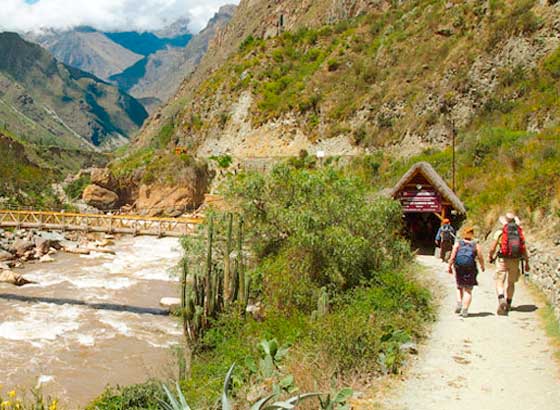
Km 82: The Starting Point of the Classic Inca Trail
Km 82 is where the adventure begins.
Located near the railway line to Machu Picchu, this is the official starting point of the Classic Inca Trail. Here, hikers meet their guide, porters, and trekking team before crossing the bridge and entering the protected Inca Trail network.
There is a special excitement in the air. Passports and permits are checked, backpacks are adjusted, and the first steps toward Machu Picchu begin.
From this moment, the journey becomes real. The sound of the river, the views of the valley, and the first stretch of the trail create the perfect introduction to one of the world’s greatest hikes.
Qoriwayrachina: A Historic Entrance to the Trail
Qoriwayrachina is another important point near the beginning of the Inca Trail. This area is closely connected with the early section of the route and offers hikers their first contact with the landscapes and history that define the trek.
The name is often associated with the region around the trailhead, where the Urubamba River, mountain views, and Inca history come together.
For many travelers, this first section creates a sense of anticipation. The great adventure to Machu Picchu has truly begun.
Llactapata: The First Impressive Inca Site
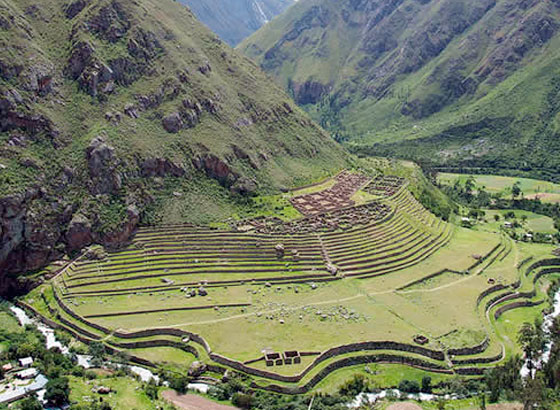
Llactapata is one of the first major archaeological sites seen along the Inca Trail.
Located at approximately 2,800 meters above sea level, this site is believed to have been used mainly for agriculture. Its name comes from the Quechua words “llacta,” meaning village, and “pata,” meaning height or elevated place.
From the trail, hikers can admire its beautiful terraces, strategic location, and views across the valley.
Llactapata gives travelers an early glimpse of the incredible engineering and planning of the Inca civilization. It also reminds hikers that the Inca Trail is not just a natural route, but a sacred and historical path filled with meaning.
Andean Valleys and Traditional Landscapes
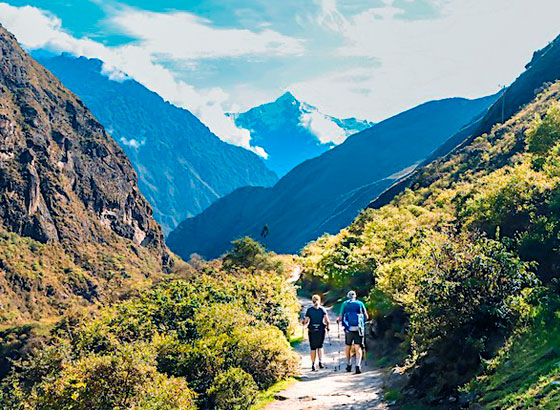
The first day of the Inca Trail is filled with traditional Andean scenery.
Hikers pass rivers, valleys, farmland, small rural communities, and mountain landscapes that show the peaceful rhythm of life in the Andes.
This part of the trek is a beautiful warm-up. The trail is not yet at its most difficult, allowing travelers to enjoy the scenery, take photos, and adapt to the hiking pace.
The combination of local villages, agricultural areas, and distant peaks creates a wonderful introduction to the Cusco to Machu Picchu trek.
Dead Woman’s Pass: The Highest Point of the Trek
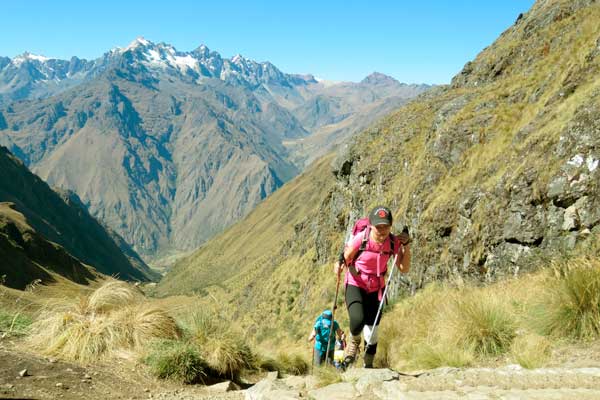
Dead Woman’s Pass, known in Quechua as Warmiwañusca, is one of the most famous landmarks on the Inca Trail to Machu Picchu.
It is not an archaeological site, but it is one of the most emotional and memorable highlights of the trek.
Located at approximately 4,215 meters / 13,828 feet above sea level, Dead Woman’s Pass is the highest point of the Classic Inca Trail. The climb is challenging, but reaching the summit brings an unforgettable sense of achievement.
From the top, hikers can enjoy breathtaking views of the surrounding mountains and valleys. On clear days, the scenery is spectacular, with the majestic Andes stretching in every direction.
This is often the moment when travelers realize how powerful the Inca Trail experience truly is.
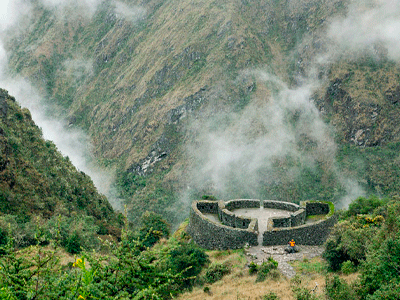
Runkurakay: A Circular Inca Site in the Mountains
Runkurakay is one of the most unique Inca Trail archaeological sites.
This circular ruin is located along the mountain route and is believed to have served as a tambo, or resting place, for Inca messengers traveling through the empire.
Its design includes two concentric walls, chambers, and a central courtyard. The structure’s location suggests that it may have functioned as a checkpoint or shelter for travelers on the ancient road.
Surrounded by mountain scenery, Runkurakay offers a fascinating look into how the Incas organized movement, communication, and rest along their vast road system.
Sayacmarca: The Inca Inaccessible Tawon
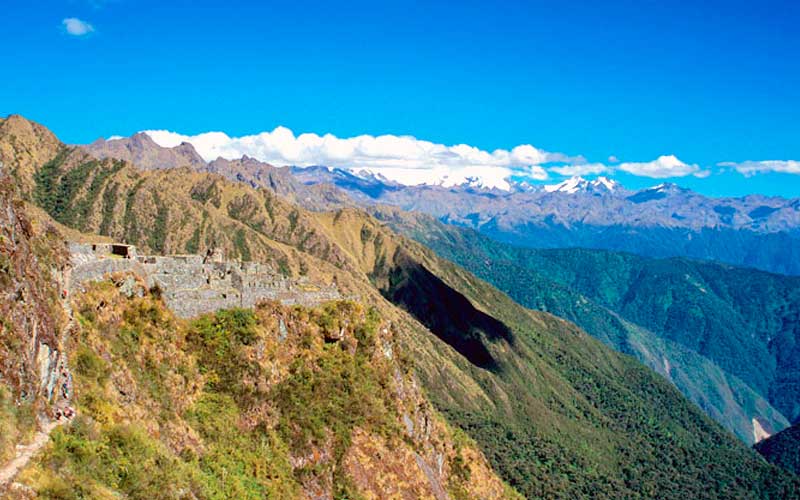
Sayacmarca means “Inaccessible Town” in Quechua, and the name perfectly describes its dramatic location.
Perched on a steep mountain ridge at around 3,600 meters above sea level, Sayacmarca is one of the most impressive sites on the Inca Trail. Reaching it requires climbing stone steps along the mountain’s edge, making the arrival even more exciting.
The site features narrow passages, stone buildings, plazas, and incredible views into the surrounding jungle and valleys.
Sayacmarca feels mysterious and powerful. Its position high above the landscape creates the sensation of entering a hidden city above the clouds.
After this section, the environment begins to change. The trail moves deeper into the tropical cloud forest, where orchids, mosses, and exotic vegetation begin to appear.
The Inca Tunnel: Ancient Engineering on the Trail
The Inca Tunnel is one of the most fascinating engineering features along the route.
Instead of going around a rocky obstacle, the Incas carved directly through solid stone to continue the trail. This section includes a tunnel, raised paths, and stonework that shows the impressive ability of Inca builders.
The most remarkable part is that these structures were created with simple tools and extraordinary skill.
Walking through the Inca Tunnel gives travelers a powerful connection to the ingenuity of the ancient engineers who designed this route centuries ago.
Phuyupatamarca: The “Town Above the Clouds”
Phuyupatamarca means “Town Above the Clouds” or “Cloud-Level Town” in Quechua.
This beautiful archaeological site is one of the most mystical places on the Inca Trail. It is located high in the mountains and often surrounded by mist, giving it a magical atmosphere.
The site includes agricultural terraces, ceremonial fountains, plazas, and stone buildings. Its water channels and fountains suggest that it may have had ceremonial or religious importance.
From Phuyupatamarca, hikers can enjoy impressive views of the cloud forest and surrounding mountains. It is one of the most scenic and spiritual highlights of the Classic Inca Trail.
Intipata: The Sunny Slope
Intipata means “Sunny Slope.”
This beautiful site is known for its wide agricultural terraces built into a steep hillside. Unlike some other Inca sites, Intipata does not have many plazas or religious buildings. Instead, its terraces show the agricultural genius of the Incas.
Its location also offers excellent views over the valley and surrounding mountains.
Because of its position close to Machu Picchu, some experts believe Intipata may have played an important role in food production or communication with the mountain city.
For hikers, Intipata is a peaceful and beautiful place to appreciate the scale of Inca terrace construction.
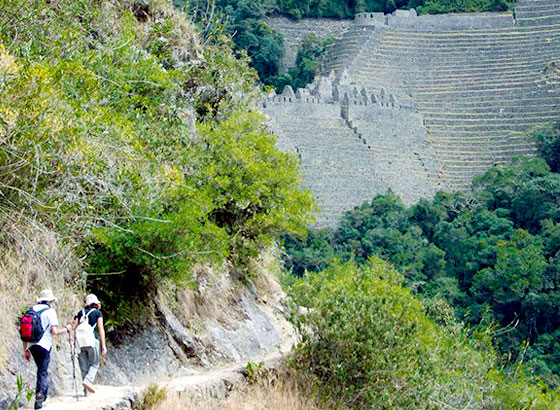
Wiñay Wayna: One of the Most Beautiful Inca Sites
Wiñay Wayna is one of the greatest highlights of the Inca Trail trek.
Its name means “Forever Young” in Quechua and is also associated with a beautiful orchid that grows in the area. This site is located on a steep hillside surrounded by cloud forest, making it one of the most scenic archaeological places on the route.
Wiñay Wayna features impressive agricultural terraces, stone buildings, ceremonial areas, stairways, and a complex system of fountains and baths.
Many travelers consider Wiñay Wayna the most beautiful Inca site before Machu Picchu. Its location, architecture, and atmosphere create an unforgettable experience.
Some researchers believe it may have served as a final purification site before arriving at Machu Picchu.
Nearby, the area is rich in native flora and fauna, including orchids and other plants typical of the cloud forest.
Inti Punku: The Sun Gate
Inti Punku, the famous Sun Gate, is the emotional gateway to Machu Picchu.
On the final morning of the trek, hikers begin before dawn and walk toward this iconic viewpoint. After several days of hiking, climbing, and exploring ancient sites, the first view of Machu Picchu from Inti Punku is unforgettable.
For many travelers, this is the most powerful moment of the entire journey.
The Sun Gate was once an important entrance to Machu Picchu. Today, it remains the special reward for those who complete the Classic Inca Trail.
Seeing Machu Picchu appear below, surrounded by mountains and morning light, is a memory that stays forever.
Machu Picchu: The Final Reward
Machu Picchu is the grand finale of the Inca Trail to Machu Picchu.
Arriving on foot gives the experience a deeper meaning. Instead of simply entering by bus, hikers reach the citadel after days of effort, discovery, and connection with the ancient trail.
Once inside Machu Picchu, your guide leads you through the most important areas of the site, explaining its history, architecture, spiritual meaning, and mysteries.
After walking through valleys, mountain passes, cloud forests, and archaeological sites, standing inside Machu Picchu feels like a true achievement.
This is not just the end of the trail. It is the reward for completing one of the most iconic treks in the world.
Natural Highlights Along the Inca Trail
The Inca Trail attractions are not limited to archaeological sites. The natural beauty of the route is equally impressive.
Along the way, hikers can admire snow-capped mountains, deep valleys, rivers, waterfalls, cloud forests, orchids, hummingbirds, native plants, and panoramic views of the Andes.
The landscapes change constantly.
The first day offers open valleys and traditional farming scenery. The second day brings high mountain terrain and dramatic passes. The third day enters lush cloud forest. The fourth day reveals the unforgettable view of Machu Picchu.
This variety makes the Classic Inca Trail one of the most beautiful trekking routes in Peru.
Cultural and Historical Highlights
The Inca Trail was part of the ancient Qhapaq Ñan, the vast Inca road system that connected different regions of the empire.
This route was not only used for travel. It connected sacred places, agricultural zones, ceremonial sites, strategic viewpoints, and important settlements.
Walking the Inca Trail allows travelers to experience the same stone paths once used by Inca messengers, priests, nobles, and pilgrims.
The archaeological sites along the route reveal the intelligence of Inca planning. Terraces were built for farming. Water channels were used for ceremonies and daily life. Mountain viewpoints were chosen with purpose.
Every site has a story. Every stone has meaning.
This cultural depth is one of the reasons why the Inca Trail to Machu Picchu remains so special.
Best Photo Spots on the Inca Trail
The Inca Trail is full of unforgettable photo opportunities.
Some of the best photo spots include Llactapata, where travelers can capture the first major archaeological site of the trek.
Dead Woman’s Pass is perfect for mountain views and achievement photos at the highest point of the trail.
Runkurakay offers unique circular architecture surrounded by Andean scenery.
Sayacmarca is ideal for dramatic views of ruins above the clouds.
Phuyupatamarca provides beautiful terraces, fountains, and misty mountain landscapes.
Wiñay Wayna is one of the most photogenic Inca sites on the route, with its terraces, stone buildings, and cloud forest setting.
Inti Punku is the classic place for the first view of Machu Picchu.
Finally, Machu Picchu itself offers one of the most famous travel photos in the world.
Why the Inca Trail Is Unique Compared to Other Treks
Peru has many incredible trekking routes, including Salkantay, Lares, Ausangate, and Choquequirao. Each one has its own beauty.
However, the Inca Trail is unique because it combines nature, history, culture, and direct access to Machu Picchu through the Sun Gate.
No other trek offers the same concentration of original Inca paths and archaeological sites along the way.
The Classic Inca Trail also has a special sense of progression. Each day brings hikers closer to Machu Picchu while revealing new layers of the ancient Inca world.
This is why many travelers consider it the most complete Machu Picchu hiking tour.
It is not only a trek. It is a journey through the heart of Inca history.
Day-by-Day Highlights of the Classic Inca Trail
Day 1: Cusco – Km 82 – Wayllabamba or Ayapata
The first day begins with a transfer from Cusco to Km 82, where the Classic Inca Trail starts.
Highlights include the excitement of entering the trail, views of the Urubamba River, Andean valleys, traditional landscapes, and the first Inca archaeological sites such as Llactapata.
This day is a warm-up hike with beautiful scenery and a gentle introduction to the route.
Day 2: Dead Woman’s Pass – Pacaymayo
Day 2 is the most challenging day of the Inca Trail trek.
The main highlight is the ascent to Dead Woman’s Pass, the highest point of the trek at approximately 4,215 meters / 13,828 feet.
The climb is demanding, but the reward is unforgettable. Reaching the summit brings panoramic views, strong emotions, and a deep sense of achievement.
After the pass, hikers descend toward Pacaymayo for the night.
Day 3: Runkurakay – Sayacmarca – Phuyupatamarca – Wiñay Wayna
Day 3 is one of the most scenic and culturally rich days of the Classic Inca Trail.
Highlights include Runkurakay, Sayacmarca, the Inca Tunnel, Phuyupatamarca, Intipata, and Wiñay Wayna.
The trail passes through cloud forest, stone paths, terraces, and some of the most beautiful archaeological sites on the route.
For many travelers, this is the most magical day of the trek.
Day 4: Sun Gate – Machu Picchu – Cusco
The final day begins early with the hike to Inti Punku, the Sun Gate.
From here, hikers enjoy their first unforgettable view of Machu Picchu. This emotional moment is one of the greatest highlights of the entire journey.
After descending to the citadel, travelers enjoy a guided tour of Machu Picchu before returning to Cusco.
This final day completes the dream: arriving at Machu Picchu by walking the ancient Inca path.
Why Book the Inca Trail with a Local Cusco-Based Operator
Booking the Inca Trail with a professional local Cusco-based tour operator gives travelers security, comfort, and peace of mind.
A reliable local company manages official Inca Trail permits, entrance tickets, transportation, campsites, guides, porters, cooks, meals, and camping equipment.
Expert licensed guides help travelers understand the meaning of each archaeological site. They also manage the pace, support hikers during difficult sections, and help create a safe and enjoyable experience.
Porters carry camping equipment, while cooks prepare fresh and nutritious meals along the route. Quality tents and organized logistics make the trek more comfortable.
A local operator also offers personal assistance before and during the tour, helping travelers prepare properly for altitude, weather, packing, and permits.
Choosing the right team can transform the Inca Trail from a difficult hike into a smooth, meaningful, and unforgettable adventure.
Final Thoughts
The Inca Trail attractions and highlights make this route one of the most extraordinary travel experiences in the world.
Every day offers something special.
You begin in Andean valleys, pass ancient agricultural terraces, climb to Dead Woman’s Pass, explore mysterious Inca sites, walk through cloud forests, visit Wiñay Wayna, and finally arrive at Machu Picchu through the Sun Gate.
This is what makes the Classic Inca Trail so powerful. It is not just the destination. It is everything you see, feel, and discover along the way.
For travelers who want to experience Machu Picchu in the most authentic and memorable way, the Inca Trail to Machu Picchu is truly unmatched.
Ready to experience the most iconic trek to Machu Picchu?
Inca Trail permits are limited and sell out quickly, especially during the high season. Booking early is the best way to secure your preferred travel dates and avoid disappointment.
Contact our local Cusco-based trekking team today to check availability, receive expert advice, and reserve your Inca Trail tour package with confidence.
Secure your place on the Classic Inca Trail today and experience the most iconic trek to Machu Picchu with a trusted local team.
Frequently Asked Questions
1. What are the main attractions on the Inca Trail to Machu Picchu?
The main attractions include Km 82, Llactapata, Dead Woman’s Pass, Runkurakay, Sayacmarca, the Inca Tunnel, Phuyupatamarca, Intipata, Wiñay Wayna, Inti Punku, and Machu Picchu.
2. What is the most beautiful Inca site on the Inca Trail?
Many travelers consider Wiñay Wayna one of the most beautiful Inca sites on the trail. Its terraces, stone buildings, fountains, and cloud forest location make it unforgettable.
3. Do you see Machu Picchu from the Sun Gate?
Yes. Inti Punku, or the Sun Gate, offers the first view of Machu Picchu for hikers completing the Classic Inca Trail. It is one of the most emotional moments of the trek.
4. What archaeological sites are included in the Classic Inca Trail?
The Classic Inca Trail includes several archaeological sites such as Llactapata, Runkurakay, Sayacmarca, Phuyupatamarca, Intipata, Wiñay Wayna, and Machu Picchu.
5. Is Wiñay Wayna included in the Inca Trail trek?
Yes. Wiñay Wayna is one of the main highlights of the Classic Inca Trail. It is usually visited on the third day or near the final section before reaching Machu Picchu.
6. What makes the Inca Trail different from other treks in Peru?
The Inca Trail is unique because it combines original Inca stone paths, archaeological sites, cloud forests, mountain passes, and the exclusive arrival at Machu Picchu through the Sun Gate.
7. Are the views on the Inca Trail worth the hike?
Yes. The views are one of the main reasons travelers choose the Inca Trail. Hikers enjoy Andean valleys, snow-capped mountains, cloud forests, Inca terraces, and the unforgettable first view of Machu Picchu from the Sun Gate.
8. Why should I book the Inca Trail in advance?
Inca Trail permits are limited and often sell out months in advance. Booking early helps secure your preferred date, especially during the dry season and peak travel months.