
The Inca Trail to Machu Picchu is more than a hike. It is a powerful journey through ancient history, dramatic Andean landscapes, cloud forests, high mountain passes, and unforgettable Inca archaeological sites.
For many travelers, walking the Classic Inca Trail is one of the most rewarding adventures in South America. Every step brings you closer to Machu Picchu, the legendary Lost City of the Incas.
However, this iconic trek is also a real physical challenge. The route includes high altitude, long hiking days, steep stone stairs, changing weather, and mountain passes that test both body and mind.
The good news is that the Inca Trail is achievable for many travelers with proper preparation, good acclimatization, and the support of expert local guides. With the right pace, equipment, and organization, the challenge becomes part of the magic.
If you are planning to book an Inca Trail tour package, understanding the altitude and difficulty will help you prepare with confidence.
How Difficult Is the Inca Trail to Machu Picchu?
The Classic Inca Trail is generally considered a moderate-to-challenging trek. It is not a technical climb, and you do not need mountaineering experience, but you should be prepared for several days of continuous hiking in the Andes.
The full 4-day Inca Trail trek covers approximately 42 km / 26 miles. Along the way, hikers cross high mountain passes, descend long stone stairways, walk through cloud forest, and camp in remote Andean landscapes.
What makes the Inca Trail difficulty unique is not only the distance. The altitude, uneven terrain, stone steps, weather changes, and early mornings all add to the challenge.
For active travelers with good preparation, the trek is very possible. For those who arrive without training or acclimatization, it can feel much harder.
This is why choosing a professional local operator is so important. A reliable Cusco-based team will organize your permits, transport, campsites, meals, porters, and expert guides, allowing you to focus on enjoying the journey.
Inca Trail Altitude: How High Does It Go?
Altitude is one of the most important factors to consider before hiking the Inca Trail to Machu Picchu.
The trek begins at Km 82, located at approximately 2,718 meters / 8,924 feet above sea level. From there, the trail gradually climbs through valleys, forests, and mountain slopes before reaching its highest point: Dead Woman’s Pass at 4,215 meters / 13,828 feet.
This is the most famous and demanding section of the Classic Inca Trail.
At this elevation, the air is thinner and oxygen levels are lower. Some hikers may feel shortness of breath, fatigue, headaches, or mild nausea. These symptoms are common at high altitude and are one of the reasons why acclimatization is essential.
Cusco is located at around 3,399 meters / 11,152 feet, making it a useful place to adapt before starting the trek. Spending at least two days in Cusco or the Sacred Valley before your Inca Trail trek can make a big difference.
Main Altitude Points on the Inca Trail
The Inca Trail includes several important altitude points:
- Cusco: approximately 3,399 m / 11,152 ft
- Km 82 starting point: approximately 2,718 m / 8,924 ft
- Wayllabamba campsite: approximately 3,000 m / 9,842 ft
- Ayapata campsite: approximately 3,300 m / 10,826 ft
- Llulluchapampa area: approximately 3,800 m / 12,467 ft
- Dead Woman’s Pass: approximately 4,215 m / 13,828 ft
- Pacaymayo campsite: approximately 3,600 m / 11,811 ft
- Runkurakay Pass: approximately 4,000 m / 13,123 ft
- Phuyupatamarca: approximately 3,650 m / 11,975 ft
- Wiñay Wayna: approximately 2,600 m / 8,530 ft
- Machu Picchu: approximately 2,430 m / 7,972 ft
Although Machu Picchu itself is lower than Cusco and most of the trail, the journey to reach it includes demanding high-altitude sections.
Day-by-Day Altitude and Difficulty Breakdown
Day 1: Cusco – Km 82 – Wayllabamba or Ayapata
The first day of the Classic Inca Trail is usually a gentle introduction to the route.
After traveling from Cusco to Km 82, the hike begins along scenic Andean valleys with views of mountains, rivers, farmland, and archaeological sites. The terrain includes gradual climbs and some moderate uphill sections, but it is generally not the hardest day.
Depending on the campsite assigned, hikers may spend the night at Wayllabamba or Ayapata. Ayapata is located higher, so the day can feel more demanding if your itinerary continues to this campsite.
This day helps your body adjust to the rhythm of the trek. It is also the perfect moment to get used to your hiking pace, boots, daypack, and the guidance of your trekking team.
Day 2: Dead Woman’s Pass – The Most Challenging Day
Day 2 is widely considered the hardest day of the Inca Trail to Machu Picchu.
The main challenge is the long and steep ascent to Dead Woman’s Pass, the highest point of the trek at approximately 4,215 meters / 13,828 feet. This climb tests your endurance, breathing, and mental strength.
The trail rises through changing ecosystems, from green valleys to high mountain terrain. As you gain altitude, the air becomes thinner and the pace becomes slower. Even fit hikers often feel the effect of the elevation.
Reaching the top of Dead Woman’s Pass is one of the most emotional moments of the entire Inca Trail trek. The sense of achievement is unforgettable. After the summit, the trail descends toward Pacaymayo, where many groups camp for the night.
This day is challenging, but with patience, hydration, regular breaks, and encouragement from your guide, it becomes one of the most rewarding parts of the journey.
Day 3: Cloud Forests, Inca Sites, and Long Descents
Day 3 is often considered the most beautiful day of the Classic Inca Trail. It is also physically demanding.
The route includes impressive Inca archaeological sites, stone stairways, cloud forest, mountain views, and lush vegetation. Hikers may pass places such as Runkurakay, Sayacmarca, Phuyupatamarca, and Wiñay Wayna, depending on the itinerary and campsite.
Although the altitude begins to decrease, the long descents can be hard on the knees. Ancient stone steps, uneven surfaces, and many downhill sections require concentration and control.
This day is less intense than the climb to Dead Woman’s Pass, but it is still a serious hiking day. Trekking poles can be very helpful, especially during the downhill sections.
The reward is extraordinary. As you move deeper into the cloud forest, the scenery becomes greener, warmer, and more mysterious. You can truly feel that Machu Picchu is getting closer.
Day 4: Sun Gate and Machu Picchu
The final day begins early, often before sunrise. Hikers make their way toward Inti Punku, also known as the Sun Gate.
This final section is not the longest, but it is full of emotion. After several days of hiking through mountains, forests, and ancient paths, you finally reach the point where Machu Picchu appears in the distance.
Seeing Machu Picchu for the first time from the Sun Gate is a once-in-a-lifetime experience. It is the moment when all the effort, altitude, early mornings, and tired legs become completely worth it.
From Inti Punku, the trail descends toward Machu Picchu for a guided visit of the famous Inca citadel.
This is the unforgettable reward of the Inca Trail to Machu Picchu.
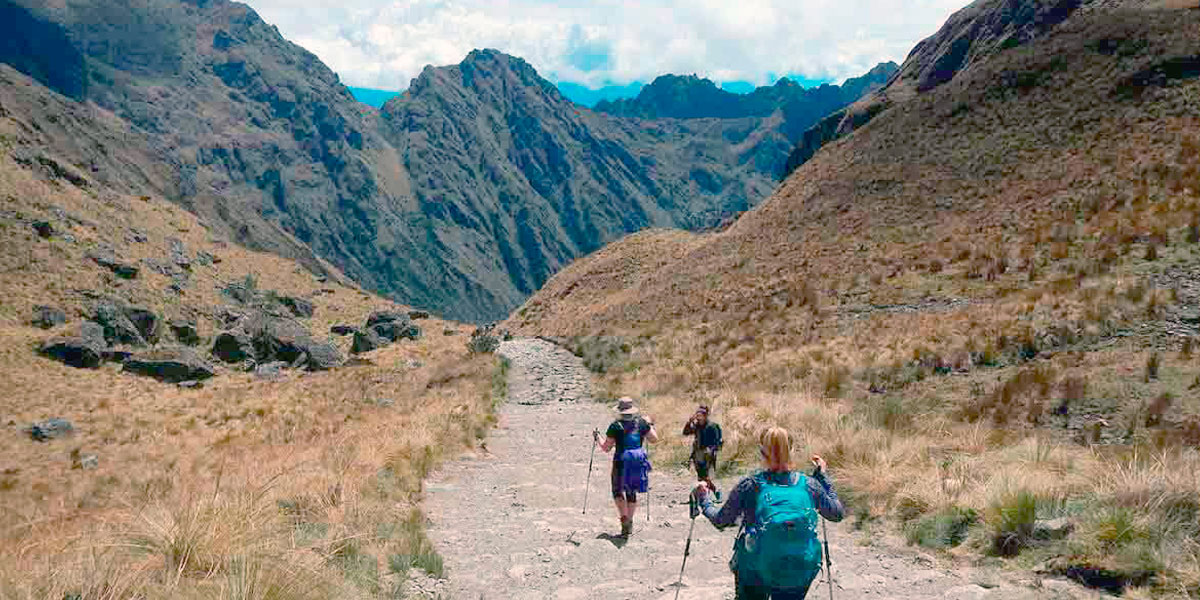
What Makes the Inca Trail Challenging?
The Inca Trail difficulty comes from several factors working together.
Altitude
The highest point of the trek reaches 4,215 meters / 13,828 feet. At this elevation, breathing can feel harder, and hikers may move more slowly than usual.
Stone Stairs
The Inca Trail includes thousands of original stone steps. Some are steep, uneven, and slippery when wet.
Daily Hiking Hours
Depending on the day and pace, hikers may walk between 5 and 9 hours. Day 2 is usually the longest and most physically demanding.
Weather Changes
The weather in the Andes can change quickly. Hikers may experience sunshine, cold winds, rain, mist, and chilly nights during the same trek.
Uneven Terrain
The trail includes rocky paths, narrow sections, dirt trails, stone stairs, and mountain passes. Good hiking shoes are essential.
Mental Challenge
The Inca Trail is not only physical. It also requires patience, determination, and a positive attitude. Taking one step at a time is the best strategy.
Is the Inca Trail Suitable for Beginners?
Yes, beginners can hike the Inca Trail if they are reasonably fit, mentally prepared, and properly acclimatized.
You do not need to be an athlete, but you should be comfortable walking for several hours per day. It is highly recommended to train before your trip with regular hikes, long walks, cardio exercise, and stair climbing.
Beginners should also plan to spend at least two days in Cusco or the Sacred Valley before starting the trek. This gives the body time to adjust to the altitude and reduces the risk of feeling unwell on the trail.
A professional guide also makes a big difference. Experienced local guides know how to manage the pace, organize rest stops, monitor symptoms, and encourage hikers during difficult sections.
With preparation and the right support, the Inca Trail can be a successful and unforgettable experience for first-time hikers.
How to Prepare for the Inca Trail Altitude
Good preparation can greatly improve your trekking experience.
Start training several weeks before your trip. Focus on walking, hiking, cardio, leg strength, and climbing stairs. If possible, practice with a small daypack so your body gets used to carrying weight.
Arrive in Cusco before the trek and give yourself time to acclimatize. Avoid rushing directly from sea level to the trail.
Drink plenty of water, eat light meals, and avoid alcohol before starting the hike. Rest well and listen to your body.
During the trek, walk slowly and steadily. The Inca Trail is not a race. A comfortable pace allows your body to adapt better to the altitude.
Pack properly. Bring layers, waterproof gear, sun protection, a hat, gloves, a warm jacket, good hiking boots, and a quality sleeping bag.
Most importantly, follow your guide’s advice. Professional trekking guides understand the route, altitude, weather, and physical demands of the Inca Trail.
Altitude Sickness on the Inca Trail
Altitude sickness can happen when the body has difficulty adapting to high elevations. On the Inca Trail, mild symptoms may include headache, tiredness, shortness of breath, dizziness, loss of appetite, or nausea.
These symptoms are often mild and improve with rest, hydration, and a slower pace. However, it is important to take altitude seriously.
Before traveling, consult your doctor if you have medical concerns or a history of altitude-related problems. Your doctor can give you personal advice based on your health condition.
On the trail, professional guides monitor hikers carefully. They help manage pace, hydration, breaks, and general well-being. A good local operator will always prioritize safety over speed.
The best way to reduce altitude problems is to acclimatize before the trek, drink enough water, avoid alcohol, eat properly, and walk at a steady pace.
Inca Trail Climate and Weather Conditions
The Inca Trail crosses different ecological zones, which means the climate can vary throughout the route.
During the day, the sun can be strong, especially in exposed mountain areas. Sunscreen, sunglasses, and a hat are very important.
At night, temperatures can drop sharply, especially at higher campsites. A warm jacket, thermal layers, and a good sleeping bag are essential.
Rain is possible at any time of year, especially during the wet season from December to March. The Inca Trail is closed every February for maintenance, conservation, and safety reasons.
The dry season, from May to September, usually offers clearer skies and better hiking conditions. However, nights can be cold, and permits sell out quickly during this popular period.
The shoulder months, such as April, May, September, and October, can also be excellent times to hike the Inca Trail, with fewer crowds and pleasant conditions.
Why Hiking with a Local Operator Makes the Trek Easier
Booking the Inca Trail to Machu Picchu with a reliable local Cusco-based operator makes the experience safer, smoother, and more enjoyable.
A professional trekking company takes care of the details that travelers cannot manage alone. This includes Inca Trail permits, transportation, entrance tickets, campsites, porters, meals, equipment, and guided tours.
Expert local guides bring the route to life. They explain the history of the Inca sites, share cultural knowledge, manage the pace, and support hikers during difficult moments.
Porters help carry camping equipment, allowing you to hike with a lighter daypack. Skilled cooks prepare nutritious meals that give you energy for each day of the trek.
Good equipment also matters. Quality tents, sleeping mats, dining areas, and emergency support help make the adventure more comfortable.
Most importantly, a trusted operator gives you peace of mind. You can focus on the beauty of the Andes, the history of the trail, and the excitement of reaching Machu Picchu.
Final Thoughts
The Inca Trail to Machu Picchu is challenging, but that is exactly what makes it so meaningful.
The altitude, stone steps, long climbs, and changing weather all become part of the story. Every difficult section brings a sense of achievement. Every mountain pass reveals a new view. Every ancient stone path connects you more deeply with the history of Peru.
When you finally arrive at the Sun Gate and see Machu Picchu appear in the distance, the effort becomes unforgettable.
For travelers who want more than a simple visit, the Classic Inca Trail is one of the most powerful ways to experience Machu Picchu.
With good preparation, proper acclimatization, and the support of expert local guides, this legendary trek can become one of the greatest adventures of your life.
Ready to hike the Inca Trail to Machu Picchu?
Inca Trail permits are limited and often sell out months in advance, especially during the dry season. If this trek is on your travel list, booking early is the best way to secure your preferred dates.
Contact our local Cusco-based trekking team today to check availability, receive expert advice, and reserve your Inca Trail tour package with confidence.
Let us help you prepare for the altitude, understand the difficulty, and enjoy a safe, well-organized, and unforgettable journey to Machu Picchu.
Book your Inca Trail trek now and take the first step toward one of the most iconic adventures in Peru.
Frequently Asked Questions
1. How difficult is the Inca Trail to Machu Picchu?
The Inca Trail to Machu Picchu is considered moderate to challenging. The trek includes high altitude, steep climbs, stone stairs, long hiking days, and changing weather. However, many travelers complete it successfully with training, acclimatization, and the support of professional guides.
2. What is the highest altitude on the Inca Trail?
The highest point of the Classic Inca Trail is Dead Woman’s Pass, located at approximately 4,215 meters / 13,828 feet above sea level. This is usually the most challenging section of the trek.
3. Can beginners hike the Inca Trail?
Yes. Beginners can hike the Inca Trail if they are reasonably fit, prepared, and acclimatized before starting. It is recommended to train in advance with long walks, hikes, cardio exercise, and stair climbing.
4. How many days should I acclimatize before the Inca Trail?
It is recommended to spend at least two days in Cusco or the Sacred Valley before starting the Inca Trail. This helps your body adjust to the altitude and makes the trek more enjoyable.
5. What is the hardest day of the Inca Trail?
Day 2 is usually the hardest day because hikers climb to Dead Woman’s Pass, the highest point of the trek. The ascent is steep, and the high altitude makes the climb more demanding.
6. Can I get altitude sickness on the Inca Trail?
Yes, altitude sickness can happen on the Inca Trail. Symptoms may include headache, tiredness, nausea, dizziness, or shortness of breath. Proper acclimatization, hydration, rest, and a slow pace can help reduce the risk.
7. How fit do I need to be for the Inca Trail?
You should have a reasonable fitness level and be comfortable walking several hours per day. You do not need to be an athlete, but regular training before the trek is highly recommended.
8. Is the Inca Trail worth the challenge?
Absolutely. The Inca Trail is one of the most rewarding treks in the world. The combination of mountain scenery, ancient Inca sites, cloud forest, and the final arrival at Machu Picchu makes the challenge completely worthwhile.